
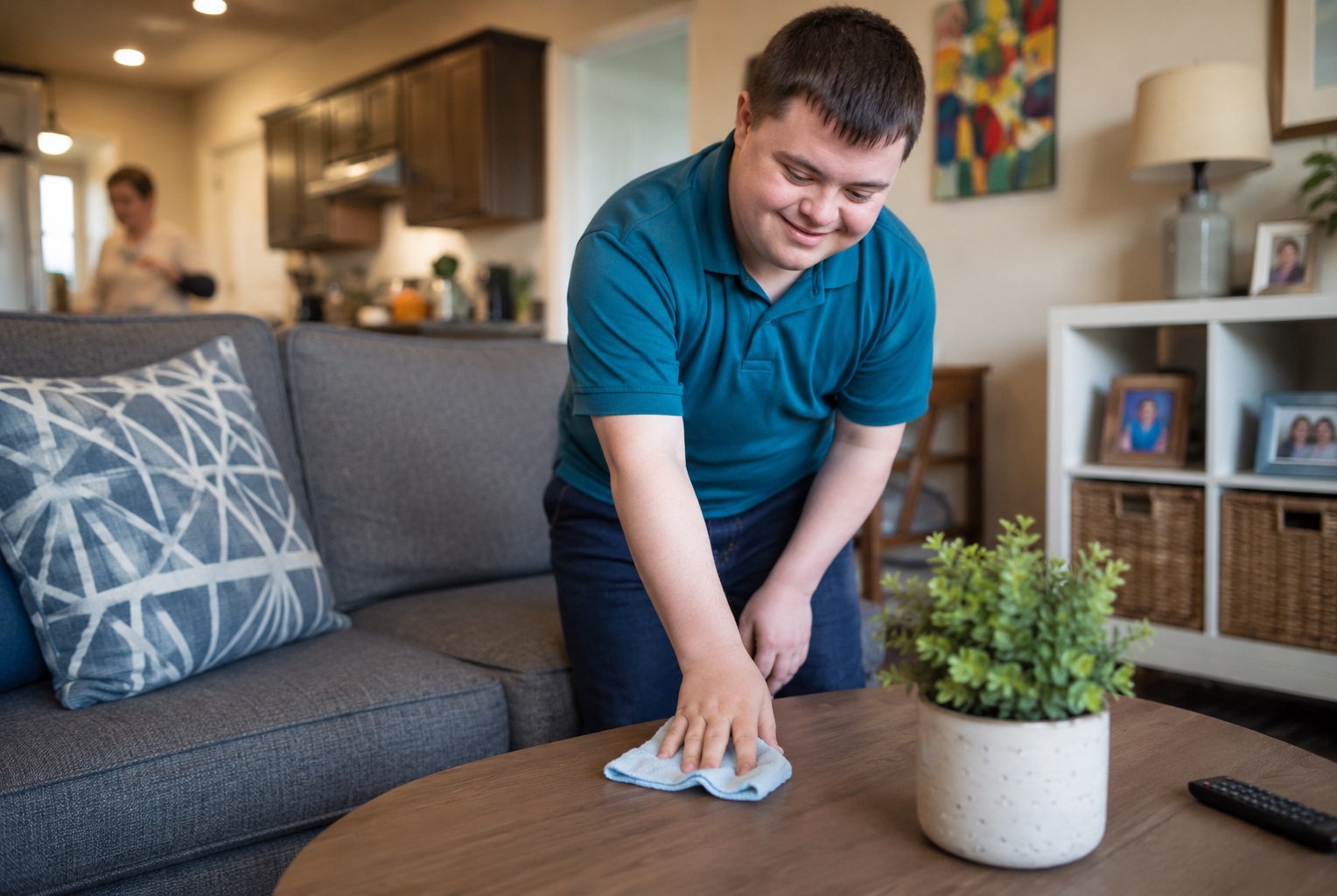
The first time someone enters a new home, the smallest details often make the biggest impression. A doorway that is easy to navigate, a comfortable chair placed near a window, a familiar item displayed on a shelf, or a clear pathway through the room can create an immediate sense of comfort. I once watched someone walk into a new living space and pause before moving forward. They looked around carefully, noticing where things were placed and how easily they could move from one area to another. After a few moments, they smiled and began exploring the space with confidence. The environment itself had quietly communicated an important message: this place was created with them in mind.
For individuals with intellectual and developmental disabilities, a residential setting should be more than a place to receive support. It should be a home where they feel safe, respected, comfortable, and empowered to live meaningful lives. Creating accessible spaces is not only about physical design. It is about understanding each person’s abilities, preferences, routines, and goals.
A truly supportive home removes barriers while creating opportunities. It allows residents to participate in daily activities, make choices, connect with others, and develop independence in an environment that respects who they are.
Accessibility is often associated with physical features such as wide pathways, supportive equipment, or easy-to-use fixtures. While these elements are important, true accessibility goes beyond the structure of a home.
An accessible space considers the whole person.
It considers how someone moves through their environment, how they communicate, how they make decisions, and what helps them feel comfortable. A home should support participation rather than create unnecessary obstacles.
For one resident, accessibility may mean having enough space to move safely throughout the home. For another, it may involve creating a calm area where they can take a break when they feel overwhelmed. Someone else may benefit from visual reminders that help them follow daily routines independently.
Every person experiences their environment differently. This is why personalized support is essential.
The most effective residential spaces are not designed around assumptions. They are designed around the people who live there.
Safety is one of the most important foundations of a supportive home, but safety should never mean limiting a person’s independence.
A well-designed residential environment allows individuals to explore, participate, and make choices while reducing unnecessary risks. When residents feel secure in their surroundings, they are often more willing to try new activities and develop new skills.
Consider something as simple as preparing a meal. In a space that is organized, accessible, and supportive, a resident may be able to participate in cooking, setting the table, or cleaning afterward. These activities provide much more than practical experience. They create opportunities for confidence, contribution, and connection.
Safety allows individuals to take part in everyday life.
The goal is not to prevent participation but to make participation possible.
Independence grows when people have opportunities to do things for themselves. Residential environments play a significant role in creating those opportunities.
A thoughtfully designed home allows residents to access belongings, participate in routines, and navigate shared spaces comfortably. Simple adjustments can make everyday activities easier and more empowering.
A kitchen arranged with accessible storage can encourage someone to prepare snacks independently. A bedroom organized according to personal preferences can help someone manage belongings and develop responsibility. A common area designed for comfort can encourage social interaction with housemates.
These details may seem small, but they have a meaningful impact.
When residents are able to participate in their daily lives, they experience a greater sense of ownership. They are not simply living in a space designed for them—they are actively shaping their own home.
A true home reflects the people who live there.
Personal spaces such as bedrooms are important because they provide residents with opportunities for self-expression. The colors, decorations, photographs, and belongings within a room tell a story about the person who lives there.
For individuals with developmental disabilities, having control over personal spaces reinforces identity and choice.
One person may fill their room with artwork and creative projects. Another may prefer a quiet space with familiar items that provide comfort. Someone else may display memories from family events or community activities.
Each choice represents individuality.
A residential environment that celebrates personal expression communicates respect. It reminds residents that their preferences are important and that their home belongs to them.
A safe home should support emotional well-being as much as physical safety.
The environment around us influences how we feel. A welcoming space can reduce stress, encourage relaxation, and help individuals feel more comfortable.
For some residents, predictable layouts and familiar routines provide reassurance. Knowing where items belong, recognizing daily patterns, and having access to personal comfort areas can create a stronger sense of stability.
Staff members also play an important role in creating emotional safety. A supportive environment is not only created through furniture placement or building features. It is created through patience, kindness, and meaningful relationships.
A resident who feels respected and understood is more likely to feel at home.
While private areas provide comfort and independence, shared spaces create opportunities for connection.
Common areas within a group home serve as places where friendships develop, conversations happen, and memories are created. A dining room can become a place for shared meals and laughter. A living room can become a space for movie nights, celebrations, or quiet conversations.
Accessible community spaces encourage residents to participate according to their interests and comfort levels.
Some individuals may enjoy group activities, while others may prefer smaller interactions. A thoughtful environment provides opportunities for both.
The purpose of shared spaces is not to force interaction but to make connection possible.
Families bring valuable knowledge about the people they love. They understand personal preferences, familiar routines, and the small details that make someone feel comfortable.
When families collaborate with residential teams, they help create environments that truly reflect each resident.
A family member may know that a certain routine helps ease transitions or that a particular item provides comfort during stressful moments. Sharing these insights allows staff to provide more personalized support.
Family involvement also strengthens trust. When loved ones see that a residential environment respects individuality and encourages independence, they gain confidence in the support being provided.
Creating a home is a partnership between residents, families, staff, and the broader community.
People continue to grow and change throughout life. A residential environment should be flexible enough to support those changes.
As residents develop new skills, their needs may evolve. They may become more independent in certain areas while requiring additional support in others.
Accessible spaces allow homes to adapt alongside the people who live there.
A resident learning new cooking skills may benefit from changes that increase kitchen participation. Someone developing communication skills may benefit from an environment that supports interaction. Another individual focusing on health goals may need spaces that encourage wellness routines.
The best environments are not static. They grow with the individuals they support.
A truly accessible home prepares residents to engage with the larger community.
When individuals feel confident and supported in their living environment, they are better prepared to participate in community activities, build relationships, and explore new experiences.
Residential services often provide opportunities for shopping trips, recreational activities, volunteering, and community events. These experiences strengthen independence and encourage inclusion.
Accessibility is not only about making a home easier to navigate. It is about creating pathways for individuals to participate fully in life.
Everyone deserves opportunities to contribute, connect, and belong.
Even the most thoughtfully designed space requires compassionate people to bring it to life.
Staff members help transform a residence from a building into a home. Through encouragement, respect, and individualized support, they create an environment where residents feel valued.
They celebrate milestones, assist with challenges, and recognize each person’s unique abilities.
A safe and accessible home is built through both physical design and human connection.
When staff understand that every interaction is an opportunity to promote dignity and confidence, residents experience support that goes beyond daily care.
They experience partnership.
A residential environment should never be defined only by what it provides. It should be recognized by what it makes possible.
A safe and accessible home makes it possible for individuals to develop independence, express themselves, build relationships, and pursue personal goals.
It creates opportunities for residents to wake up feeling comfortable, spend their days with purpose, and return to a place where they feel they belong.
The strongest residential communities understand that accessibility is not simply about removing barriers. It is about opening doors to possibility.
Creating safe, accessible spaces for residential living requires more than thoughtful design. It requires understanding each person as an individual with unique preferences, strengths, needs, and dreams. When environments are created around the people who live in them, homes become places where independence, confidence, and meaningful connections can grow.
At New Point Life Services, people with intellectual and developmental disabilities are supported through environments designed to help them thrive. Every person has specific preferences, needs, and abilities, and creating a space tailored to those changing needs allows individuals to experience greater comfort, independence, and empowerment. New Point provides a supportive community where each person is encouraged to pursue their own goals and vision toward a meaningful life.
Through positive behavior support, social skills development, and health maintenance and monitoring, New Point helps residents build confidence while receiving personalized care that respects their individuality. With the partnership of families, dedicated staff, and community supporters, residential living becomes more than support it becomes a foundation for belonging, growth, and possibility.
A truly accessible home is one where every person feels valued, included, and empowered to live life on their own terms.
Our legacy is founded in being a place where individuals are able to receive intentional care through day and residential services. We believe through our services that anyone whether individual, staff, community partner, and/or families are able to find security and safety at New Point Life Services.